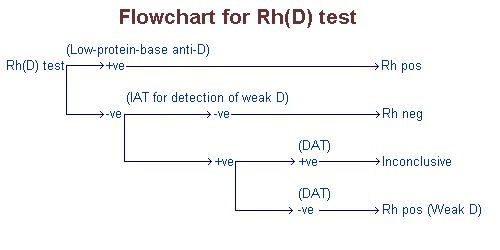
In some red cells, Rh(D) can only be unveiled by prolonged incubation with anti-D, either directly or indirectly by means of IAT. The out-dated nomenclature, Du, was used to characterize this unique Rh(D) expression. However this obsolete termination is no longer used. Nowadays weak D is preferred and universally accepted.
Weak D testing in donors and recipients:
In blood collection centres, weak D is labelled as Rh (D) positive. Confirmatory testing of donor blood unit for weak D is not required for the hospital blood bank. Testing of recipient (patient) blood for weak D is not necessary. However, weak D detection should be included in antenatal cases to exclude candidates for Rh Immune Globulin injection.
In this exercise, it is therefore important to clarify:

Last updated on 6 July, 2001.
Prepared by HKIMLSQAP Haematology & Serology Panel.
Copyright 2001 HKIMLSQAP. All Rights Reserved.
